Phantom limbs and phantom loves: The Nature of Grief
Prologue: It may be helpful to provide some initial perspective on the essay I’ve titled, Phantom limbs and phantom loves: The Nature of Grief. Grief is one of the most profound and life-changing experiences a person has in their lifetime. It is complex. It has many sides and layers. Volumes have been written about grief over the years by psychiatrists, therapists, rabbis, ministers, poets and novelists. Yet, when we as individuals face loss and grief we find ourselves back on the same ragged edge humanity has always stood on. My essay does not explain grief or capture it in its entirety. However, speaking on grief from this somewhat different and perhaps unusual perspective may add nuance and an extra layer of insight. It may help some of you understand grief, and those who grieve, a bit better.
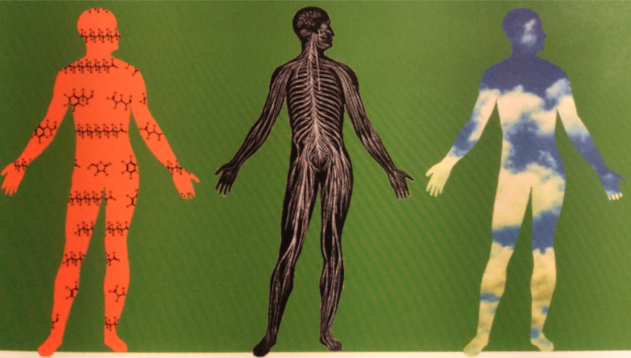
Though the world exists apart from our awareness of it, our brains create the world that we as individuals experience. This fact is usually hidden to our minds and senses as we go about living and being in the world. We see what we see. We hear what we hear. We feel what we feel. Thankfully, we are free of having to think about how all of this is accomplished by our nervous system. It is only under extreme circumstances that we can become aware that what we take for granted as being solid, real, and unquestionable is not so simple and straightforward.
One of the strangest examples of how our brains create our reality is the phenomenon of the phantom limb. This is continuing to feel an arm, leg, or other body part that has been lost through injury or amputation. Phantom limbs have been described since ancient times, and a variety of explanations, some supernatural, have been offered in attempts to understand it. In 1797, a musket ball tore through the right arm of the British naval hero, Lord Nelson. The arm was amputated, but for months afterwards he reported the exquisitely painful feeling of his fingers clenching and nails digging into the palm of his missing hand. Such real and strong pain in a hand that no longer existed led Nelson to see it as evidence of the soul existing after death. He concluded that if the spirit of an arm could continue to exist, then the spirit of the entire person could certainly exist as well.
The carnage of the American Civil War provided doctors and psychologists a wealth of sufferers of phantom limbs to study. The phenomenon began to be recognized as being varied and complex. In some cases, a phantom leg was painful. In others, an arm was free of pain but felt to be moving on its own. Some phantom limbs were painless but rigid. The phantom limb could also change over time. The phantom of an arm could transform into the sensation of most of the arm disappearing, leaving the hand alone sprouting from the shoulder. The phantom might also disappear only to fully reappear years later.
While much was learned through such studies, the true nature of the phantom limb remained a mystery. The most intuitive and widely given explanation was that the damaged tissue in the stump of the missing appendage generated these phantom sensations. However, this could not account for the full complexity of the phantom limb. For example, in some cases a habitually used walking cane or wedding ring might continue to be felt as part of a phantom hand. Paul Wittgenstein was the older brother of the philosopher Ludwig Wittgenstein. He was also a concert pianist who lost his right arm to injury in the First World War. He continued as a well-regarded left-handed only concert performer. He not only continued to experience the lost right arm as a phantom but felt the hand playing difficult passages of music on the piano and teaching his left hand the best way to perform it. Such experiences could not be attributed to mere nerve damage.
In the 1990’s, the Indian-American neuroscientist, V.S. Ramachandran, brought new understanding of phantom limbs. He surmised that while some of the phantom sensations could arise from an irritated stump of the lost arm or leg, much of the phenomenon arose from the brain still clinging to and constantly recreating the lost limb. Ramachandran’s insight led him to invent a method of treatment.
Some of Ramachandran’s patients, like Lord Nelson, felt persistent, agonizing cramping in the hand of the lost arm. They could not relax it to ease that pain. Ramachandran sat the patient at a table, had them lay their intact arm on it, and placed a mirror where the lost arm would be with the mirror reflecting the image of the intact arm. The patient was told to clench the hand of the intact arm then watch the image of the arm in the mirror as they relaxed the hand. As they relaxed the intact hand, the mirror image appeared also to relax and fooled the brain into feeling both hands relax. In many cases, the painful cramping in the phantom hand immediately vanished. Repeated treatments over weeks or months were usually required to most fully resolve the problem. Nonetheless, it was not treating the body’s damaged tissue that relieved the phantom pain. Rather it was the brain being given the opportunity to perceive reality in a new way. The brain found a way to let go.
In the human mind and brain, there are great similarities between losing a part of your body and losing someone who is deeply embedded in your life and has become an integral part of your existence. As with the limbs we learn to use from infancy then take for granted, the brain gradually integrates our interactions with a long-loved person into every aspect of our life. It makes the way they look, smell, speak, laugh, move, into solid and real parts of the world it creates. It leads our mind to expect them to be there hardly less than it expects the solid floor to be beneath our feet when we step out of bed. In grief, we still expect to meet the loved-one around every corner. A sound is taken to be their voice. Their empty chair at the table calls forth their image. With such a strong model of the individual in our brain that can so spontaneously and so fully come to mind, it seems impossible for that individual to be gone. Like the phantom hand that continues to clench, the lost person remains in our mind and brain as real as they ever were.
Almost half of individuals who have lost a life partner experience that person still being there after their death. These experiences vary. Most commonly, the bereaved report a vague, yet pervasive, almost palpable sense of the loved one’s presence near them. Many report seeing or hearing them. In rare instances, the bereaved report being touched by them. These experiences are referred to by researchers as “bereavement hallucinations.” Such terminology is unfortunate, as it suggests abnormality or even evidence of a mental illness. Rather, by most accounts these experiences in grief are normal and, perhaps, a necessary part of healing. Indeed, despite the pain it can bring, experiencing the presence of the departed can bring a kind of comfort. It forms a buffer and a bridge between the finality of loss and the resolution of grief that allows a return to life. It helps the brain find a way to let go.
No psychiatrist or therapist has surpassed William Shakespeare in understanding the workings of the human heart and mind. In his play, King John, Shakespeare has his character, Lady Constance, speak of her lost son, Prince Arthur, who had died unexpectedly. Her words speak of both the pain and the solace of grief.
She says:
“Grief fills the room up of my absent child,
Lies in his bed, walks up and down with me,
Puts on his pretty looks, repeats his words,
Remembers me of all his gracious parts,
Stuffs out his vacant garments with his form.”
Then have I reason to be fond of grief?”
The resolution of grief is more than simply deciding to accept the loss or passively waiting for the pain to resolve like the pain that inevitably fades after a splinter is removed. Because the lost loved one lives on in the mind of the bereaved, like a phantom limb, remaining part of the very fabric of their brain, they must gradually reconcile the past with the present, the habitual with the actual, and the seeming paradox of their loved one’s “presence in absence.” In the Jewish tradition, the bereaved are told, “May their memory be a blessing.” Hopefully, this is where the long process of grieving leads. But this takes time, tears, talking, sharing, and understanding.
About the Author
Scott Mendelson M.D., Ph.D.
Dr. Scott D. Mendelson earned a Ph.D. in Biopsychology at the University of British Columbia and performed post-doctoral research in Dr. Bruce McEwen's Laboratory of Neuroendocrinology at The Rockefeller University. He subsequently earned an M.D. degree at the University of Illinois College of Medicine and served his residency in Psychiatry at UVA Health University Medical Center. He is currently retired after 26 years of practicing inpatient and outpatient psychiatry.
Books by Dr. Mendelson include:
Metabolic Syndrome and Psychiatric Illness: Interactions, Pathophysiology, Assessment and Treatment. Amsterdam ; Boston : Elsevier, 2008
Beyond Alzheimer's: How to Avoid the Modern Epidemic of Dementia. Plymouth; M. Evans, 2009
Herbal Treatment of Major Depression: Scientific Basis and Practical Use. Boca Raton; CRC Press, 2019
Herbal Treatment of Anxiety: Clinical studies in Western, Chinese and Ayurvedic Traditions. Boca Raton; CRC Press, 2022
Dr. Mendelson may be reached at: s_mendelson@msn.com